This is post is for this month's RPG Blog Carnival topic: End of Times hosted on Advantage Arcana. I'm going to examine the topic Games that have to do with an imminent and/or ongoing Apocalypse, specifically causes of potential apocalypses, and what can be done about it, in broad brush strokes.

This is more about thinking about how to run these situations as a Game Master than it is about mechanics or specific details.
When the topic for this month’s blog carnival came up, a certain module written immediately came to mind, for a certain retroclone of B/X by a certain pair of authors, one of whom I have no interest in naming.
The scenario goes something like this: the player characters enter a dungeon, which unleashes a world-scale horde of undead. Conceptually, I love the idea that the players can experience and potentially survive an apocalyptic eruption of zombies, but when I heard more about it, I came to understand that this is a case of “rocks fall, everyone dies” turned up to eleven and applying to the entire setting. This is pure merde.
So first, some advice: if an apocalypse is part of your plan, or might be, make sure the players are up for it. Not doing that is (excuse my French) a mouvement de bite. Don’t do it if you want to keep your players, because it fundamentally changes the nature of the campaign. You don’t have to tell your players exactly how that apocalypse will come about, but you have to set the parameters.
The rest of this post is an inventory of various apocalypses, and won't have anymore French.
Let’s start with the Aztecs, first: They believed we are in the fifth world. The previous worlds ended by one of the following:
- The sun falling from the sky and jaguars devouring all the people;
- Everyone getting turned into monkeys, and a hurricane killing everyone;
- Fire; and
- Floods.
This, the fifth Aztec world, was supposed to be destroyed by earthquakes.
Let us examine each of these in more detail:
1. The Sun Falling From the Sky
Assuming your world is like Earth in many ways, plants stop growing immediately as everything goes dark and photosynthesis stops, and the world starts to freeze in a few weeks, although it will take a few months for the oceans to freeze completely.
This isn’t the sort of thing the player characters can just resolve on their own, unless they’ve somehow been designed to deal with this sort of scenario. This campaign could go in a few ways:
- Get a new sun (or sun god)
- Find out where the sun god went, and convince them to come back out
- Bring the god of the sun back from the land of the dead (where they might also be causing havoc); or
- Migrating the populations the player characters care about to a new world.
If your player characters world hop in some way, this possibility should be foreshadowed by travelling to or at least seeing silent worlds with no sun, already substantially frozen over. Dark little "cryoworlds".
2. Everyone Getting Eaten by Jaguars
Jaguar encounters ramp up. They could be a torrent that just attack in one giant wave, which might be a wonderful jaw-dropping moment, especially if you have a bunch of minis to put on the table to that effect.

I prefer starting smaller, with three or four jaguar encounters in a week, when the settlement hadn’t had more than two a decade for as long back as anyone remembers. Then increase occurrences over time, either in leaps and starts, just at a steadily increasing daily rate, because this builds tension,and allows player characters and NPCs to try to find ways to understand and then wrestle with the issue.
If this is preventable, the players could try to find where the jaguars are coming from:
- It could be some sort of jaguar generator, like jaguar mothers birthing triplets or quadruplets in hours, and having them prowl off a day or two later fully grown.
- Some sort of portal or series of portals allowing an overabundance of jaguars from another world to migrate to this prey-rich world.
- They just appear fully formed from clouds of mist or bursting from the forehead or ears of a sleeping god. Maybe
Once the source is found, have two or three possible methods of resolution in your back pocket, if they don’t come up with some gonzo or parascientific method themselves. In science fiction settings, the Ripley solution will almost certainly be brought up.
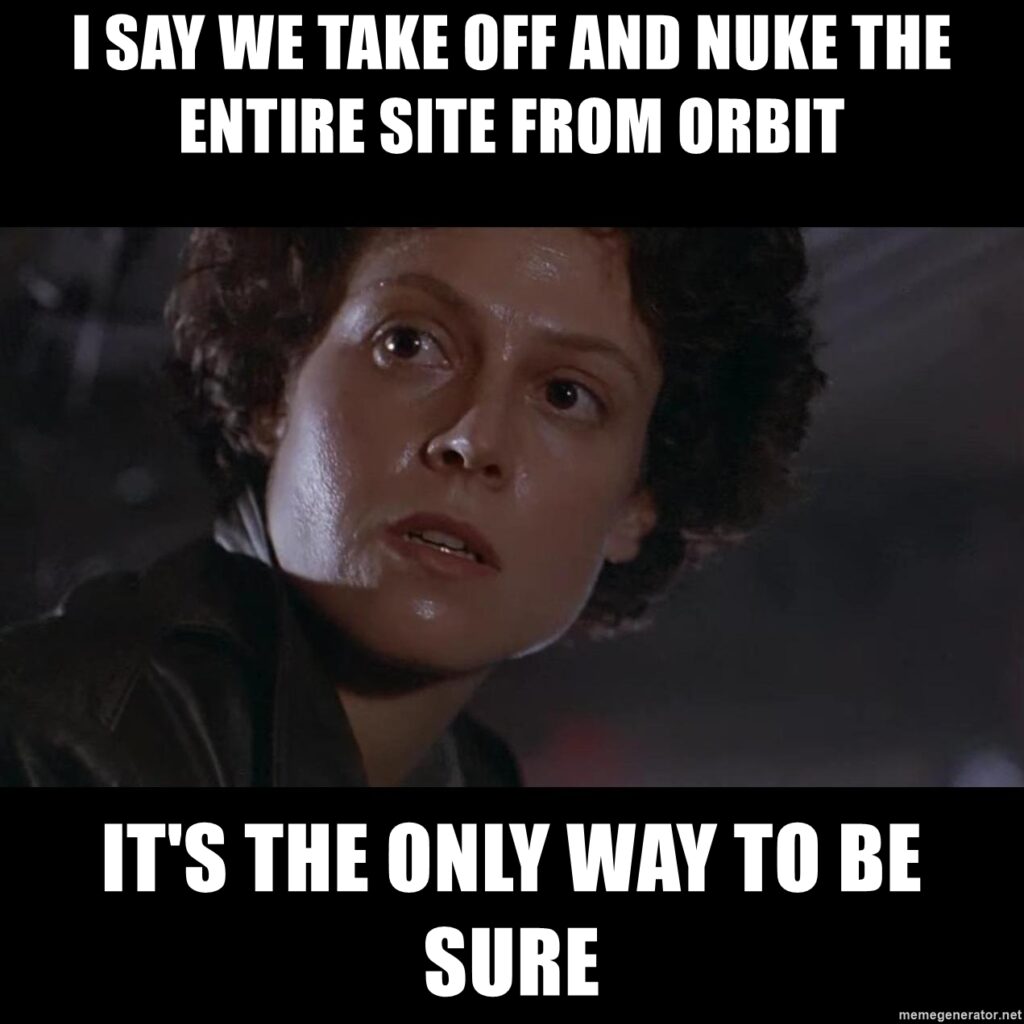
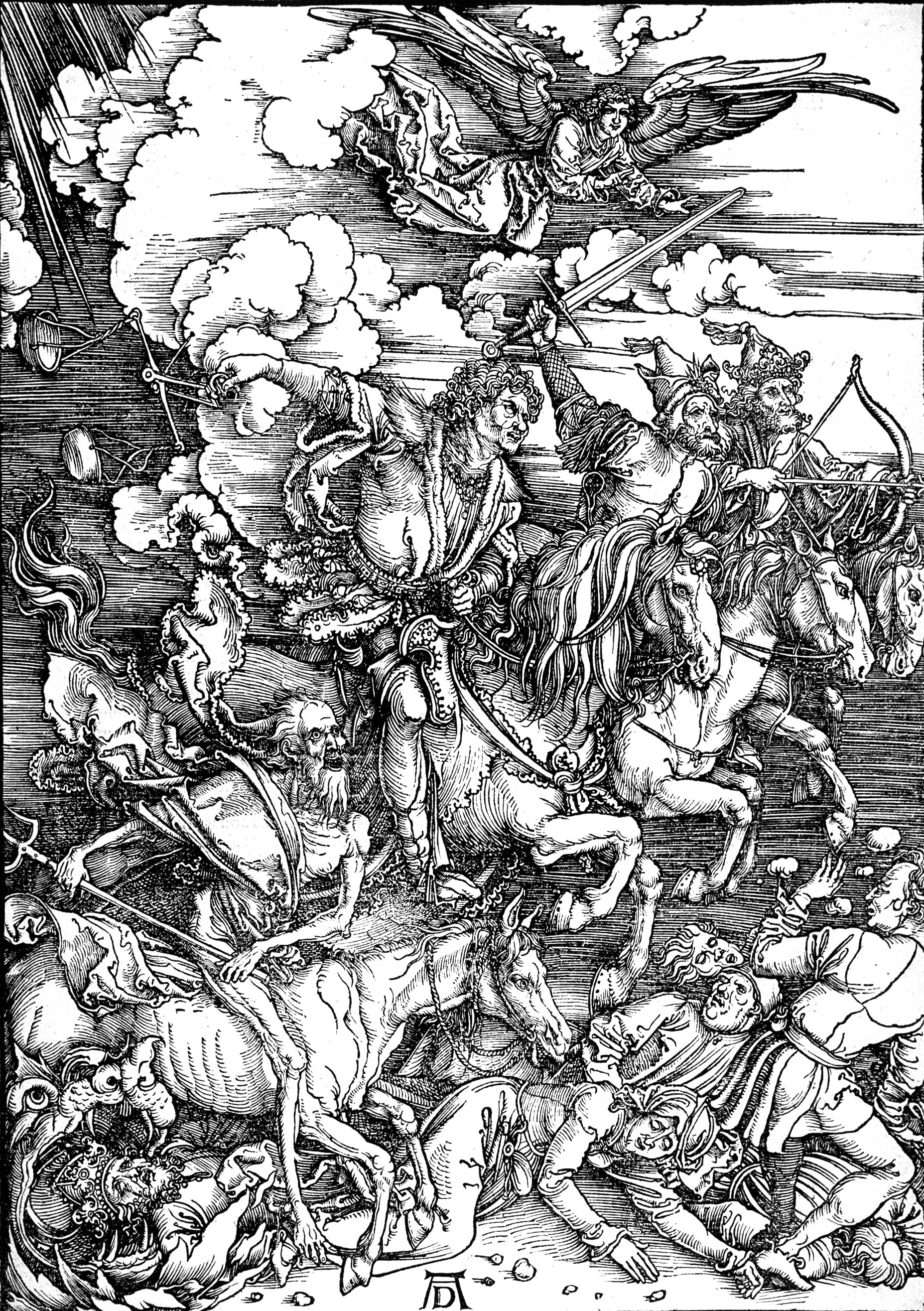
Remember, “jaguars” here have been replaced with “zombies”, “xenomorphs”, “tribbles”, “orcs”, “primates”, “robots”, and “dragons”, and there are at least two examples in popular media of each of these. The Biblical rapture is a minor variant of this, in that a bunch of people just disappear, potentially loosely replaced by a bunch of demons or the Four Horsemen of Revelations fame or its homages in popular media.

3. Everyone gets turned into Monkeys
Somehow, everyone gets turned into monkeys.
- Maybe they’re visited by monkey-vampires, who transform their bodies over an hour. The monkey-vampires can be killed, but anyone partially transformed dies.
- Maybe it’s a disease, in which case you as the GM need to track how it gets spread, how quickly it takes effect, and how many people are infected by someone carrying this disease.
- Maybe it’s a divine curse, and it affects everyone living in a city or in the world, but if you get away, you’re safe. Or maybe it affects everyone from a certain ancestry or bloodline.
There are a bunch of other ways this could go. The point is, people are being turned into not-people.
Imagine a picture of a monkey in chain mail here.
I got tired of wading through AI slop.
The impact of this on the world depends on what the monkeys do.
The best case: that stick around and try to continue what they did before. This still hurts the world or at least society, because the population will be rapidly declining until the issue is stopped.
A worse case scenario, where the monkeys stay and cause mayhem because they're just animals. Your society will have to adapt to the boom in primate pandemonium even after the cause has been dealt with.
The worst case scenario involved the monkeys actively and maliciously destroying infrastructure and harming people.
The approach to stopping this apocalypse is going to vary based on the cause. I’ll leave that as an exercise for your group.
Again, “monkeys” in this context has been replaced with “robots”, “shapeshifters”, “vampires”, and “lycanthropes”.
4. Natural and Elemental Disasters
_(cropped).jpg/1200px-Dramatic_Views_of_Hurricane_Florence_from_the_International_Space_Station_From_9_12_(42828603210)_(cropped).jpg)
Hurricane Florence from the ISS, courtesy of Wikimedia.
I’ll lump conflagrations, windstorms, floods, and earthquakes together here, and add volcanic eruptions, falling stars, because while the details vary, the approach is essentially the same:
- Get the assistance of gods, artifacts, or super technology to quell the cause of the disaster;
- Become gods, and use your divine powers to control the situation; or
- Grab what you can and run.
The scale of these disasters is so enormous, that you really only have those three options. The first one has to be epic simply because of scale. The second is also epic, but in a desperate Biblical exodus or Battlestar Galactic sort of way. Either way, this is your opportunity to play Oregon Trail: TTRPG Edition.
Now I’ll stretch beyond the Aztec catalog with more insidious apocalypses.
5. The End of an Element
I’ll cover the four Greek classical elements here to set the trope, but these are essentially the ongoing absence of something we take for granted:
- No Fire: Explicitly, no heating, no cooking, no forges, smelting, or refineries. There are workarounds for all of these, but they’re either technical, with electricity, magnetism, microwaves, or radioactive materials, or in a fantasy setting, ramp up reliance on magic or magical beasts or outsiders, or maybe use lava to fill the gap, if that’s an option.
- No Water: Explicitly, we’re talking about a setting like the planet Arrakis from the book Dune by Frank Herbert. A man’s water belongs to his tribe, because they can’t get it from anywhere else. There might be a little in the air, but the terrain of the world is a giant barren waste.
- No Air: Welcome to almost every space-based sci-fi show ever. The tool(s) that make air breathable are critical and vulnerable. When they go down, so do all the people.
- No Earth: Still with space-based sci-fi. There’s no place to put your stuff besides what you’re living in, and gravity probably isn’t a thing for you. Growing things is much tougher and more finicky, and it’s hard to get any additional resources. People will fight to the death over a few tons of dust and ice crystals.
6. No Fauna
When all the animals are gone, a lot of things change.
For one, almost everyone becomes an involuntary vegan. This isn't too much of a problem for omnivores or preexisting vegans, but obligate carnivore ancestries might have a few problems.
For another, many plants will die since they’re in symbiotic relationships. Other plants will spread rapidly because they are no longer checked by consumption by herbivores. How will this impact settlements, farms, and roads? What knock-on effects do those changes cause?
The key questions are
- Why did the animals disappear?
- Why didn’t intelligent life go with them, or did some of them go with them?
- How can they be recovered or replaced?
There’s an old Isaac Asimov story teasing my brain about this one, but I can’t recall it or the name of the story.
7. No More Humans
The apocalypse happened when the humans all died. Their stuff was around while other intelligent life evolved or was created. The why probably doesn’t matter, whether it’s disease, neutrino bombs, or nanobots, since they didn’t wipe out all life, just all humans.
The apocalypse has allowed other creatures to evolve to intelligence. Maybe it’s another primate, maybe it’s cephalopods, or a bunch of cute pastoral furries. Maybe they evolved naturally, or maybe this was a last gift of humanity or AI.
This has been excellently covered in several ways by various books by science fiction author Adrian Tchaikovsky, amongst others.
This also shows up in TTRPGs Wanderhome, Pugmire, and After the Bomb.
8. The Return of Magic
Starting with a normal world at some point in history and then adding magic and magical creatures is a kind of apocalypse. That apocalypse rarely gets played through, but the society after that is often used as a setting, and even if it is recognizable, it is drastically different from what went on before. See: Shadowrun and Rifts, amongst others.
A return of magic is often combined with a return of magical creatures, sometimes including a portion of the population of mundane creatures turning into similar magical creatures. This sometimes includes humans turning into other humanoid ancestries.
The exploration here is of how society, geography, ecology and other parts of the world change in light of this.
9. The Almost Unfixable
There are a few situations in which running or divinity are the only two options:
- No More Light: unless your players are all playing morlocks or have some other light substitute, which the player characters almost never do.
- No More Sound: not quite as bad as no more light, unless your players are all playing bats or morlocks.
- No More Flora: Everyone is starving in weeks, or at best months.
- No More Metal: Unless this is your starting point, and you’re playing a stone age game, this might be playable, but most players won’t be interested in playing it. “What do you mean my +2 flame tongue rusts up?” “What do you mean my mech turns into a puddle of goo?” It might be interesting to travel to a world that has adapted to that situation, but the player characters still won’t like it if their gear falls apart.
These reason I claim all of these situations are unplayable is because the changes to society are so much more brutal than any of the prior ones that they either affect the way the Game Master describes the setting, or they change the baseline of the game experience of the game used that it's an enormous stretch to get to what the game is attempting to explore.
If there are games that have been designed to cover these situations, a game exploring some of these situations would certainly be something I'd like to take a look at.
Summary
An apocalypse is a substantial change in some aspect of the setting that breaks the ability of existing societies to exist within that setting.
References
A list of articles that provoked thought. I can't comment on the veracity of any of them.
General
Aztec apocalypses have been on my mind since 2012.
- https://theoutline.com/post/1485/how-the-aztecs-predicted-the-apocalypse
- https://www.mexicolore.co.uk/aztecs/ask-experts/how-did-the-aztecs-know-the-fifth-world-would-be-destroyed-by-an-earthquake
1. The Sun Disappearing
This seems to be something that has inspired multiple postings by smart sciency people:
- https://www.discovery.com/science/What-Would-Happen-If-the-Sun-Disappeared
- https://public.nrao.edu/ask/what-would-happen-to-earth-if-the-sun-suddenly-disappeared/
Nice, I'd love to play in any game you run.
ReplyDeleteThanks, and happy New Year!
Delete